Remote Online Notarization (RON) is more prevalent than ever and is steadily moving from a niche option to a mainstream way to close. Remote closings are increasingly common, but the details still depend on where you’re buying, who your lender is, and how your title company handles digital documents.
What is Remote Online Notarization?
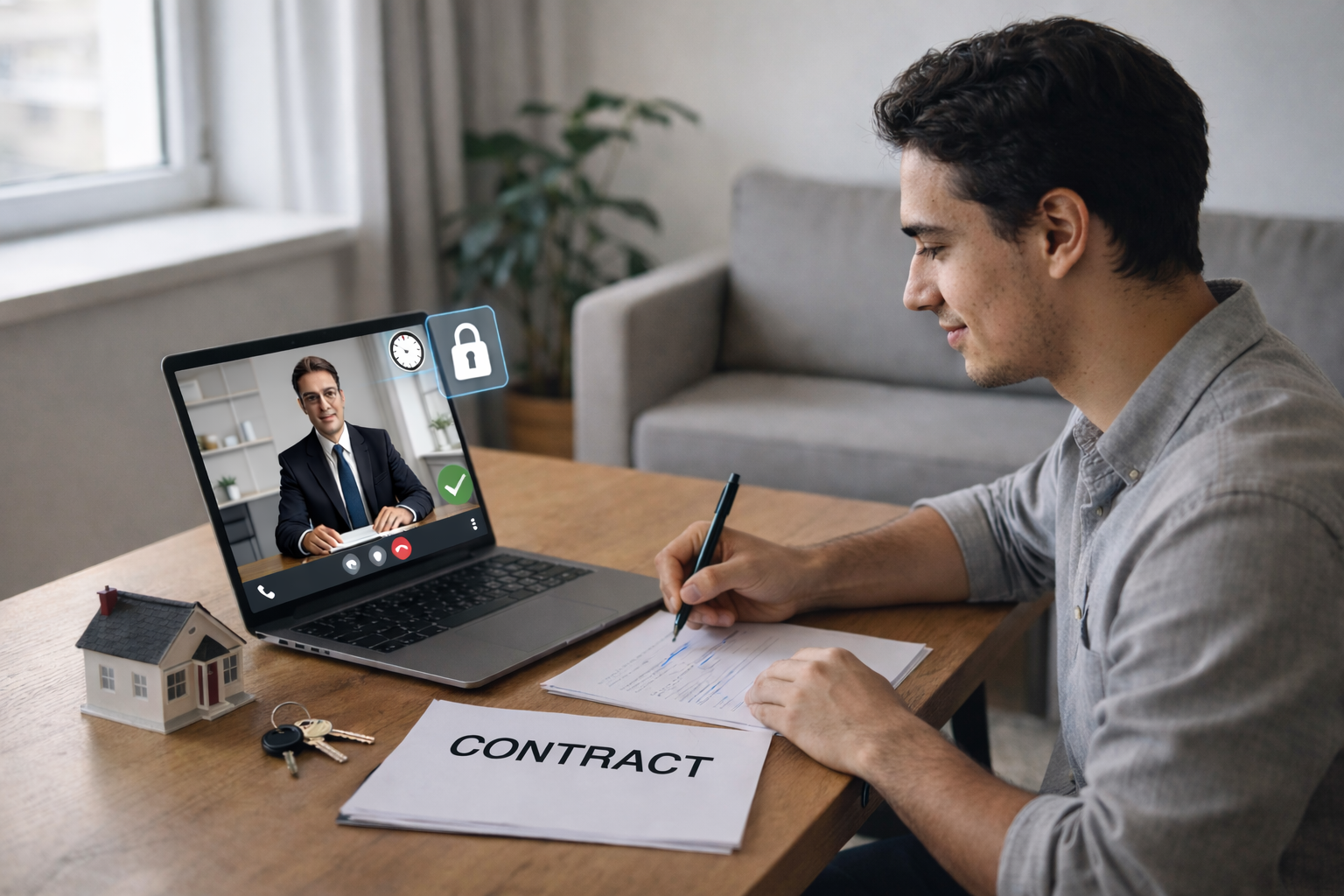
Remote Online Notarization (RON) lets you complete notarizations over a secure video session instead of meeting a notary face to face. You join a live video call, go through identity verification, review your documents on screen, and sign electronically.
RON gained momentum during the pandemic, but its popularity has continued because it offers real convenience. When it’s allowed for your transaction, you can often close from your living room, your office, or even while you’re on the road.
The Shift Towards Remote Closings
More states now have permanent RON laws in place, building on temporary measures that started during the pandemic. The overall direction is toward broader acceptance, though specific requirements still vary by state and even by county.
The technology behind RON platforms keeps improving as well. Today’s systems are more secure, more intuitive to use, and integrate more smoothly with title, escrow, and lender workflows.
Lenders have also grown more comfortable with digital closings. Many major lenders now have established procedures to handle remotely notarized documents so they can move through underwriting, funding, and recording without disruption.
Benefits of remote closings
Convenience is the biggest draw. You avoid taking unnecessary time off work, arranging childcare, or coordinating everyone’s calendar around a single in‑person meeting.
Remote closings can also help speed things up. Because there’s no need to reserve a conference room or get everyone in the same place at the same time, it’s often easier to find a time that works.
Accessibility is another key advantage. If you’re buying in a different state, you may not need to travel just to sign. For those with mobility or health challenges, being able to close from home can remove major obstacles.
What you need for a remote closing
You’ll want a stable, reasonably fast internet connection so your video call doesn’t freeze or drop at a critical moment.
You’ll also need a computer, tablet, or smartphone with a working camera and microphone; while most platforms support phones, a larger screen can make it much easier to review the documents you’re signing.
A valid government‑issued photo ID is required for identity checks, and you’ll be asked to present it clearly on camera. Finally, a quiet, private space helps you stay focused and ensures you can hear explanations and ask questions without distraction.
What may still require in‑person steps
Some states still require certain documents, or certain types of real‑estate transactions, to be signed or notarized in person. Local recording practices can also affect whether a county will accept electronically signed and remotely notarized documents.
On the lending side, some products still have extra rules. FHA, VA, and certain jumbo or specialty loans may have additional conditions for remote closing or may only allow RON in specific circumstances.
Your title or escrow company is the best guide to what’s allowed in your situation. Ask early in the process so you can plan whether your closing will be fully remote, hybrid, or in person.
Security considerations
Modern RON platforms use multiple layers of security to help protect both identity and documents. Common safeguards include knowledge‑based questions, automated checks on your ID, facial comparison tools, secure recording of the session, and encryption that makes documents tamper‑evident.
You should still take standard precautions. Always access the closing through the official link from your title company or lender, and confirm you’re working with a properly commissioned notary. Be cautious with unexpected emails or texts and avoid clicking on links that don’t come from a verified source.
Sweetwater’s approach to remote closings
At Sweetwater Title Co., both in‑person and remote closing options are available so you can choose what fits your schedule, comfort level, and loan requirements. Some clients still prefer the traditional experience of everyone sitting around a closing table, while others love the flexibility of signing from home.
Before your remote closing, the team walks you through the technology so there are no surprises. Connections are tested, your questions are answered, and everyone makes sure you’re ready for signing day.
If a technical issue pops up mid‑closing, backup plans are in place. A frozen screen or dropped call might cause a brief delay, but it doesn’t have to jeopardize your closing or your move‑in timeline.
If you want to explore whether a remote closing is an option for your transaction, reach out to Sweetwater Title Co. The team can explain what’s possible under current rules and lender guidelines and help you decide which closing format makes the most sense for you.