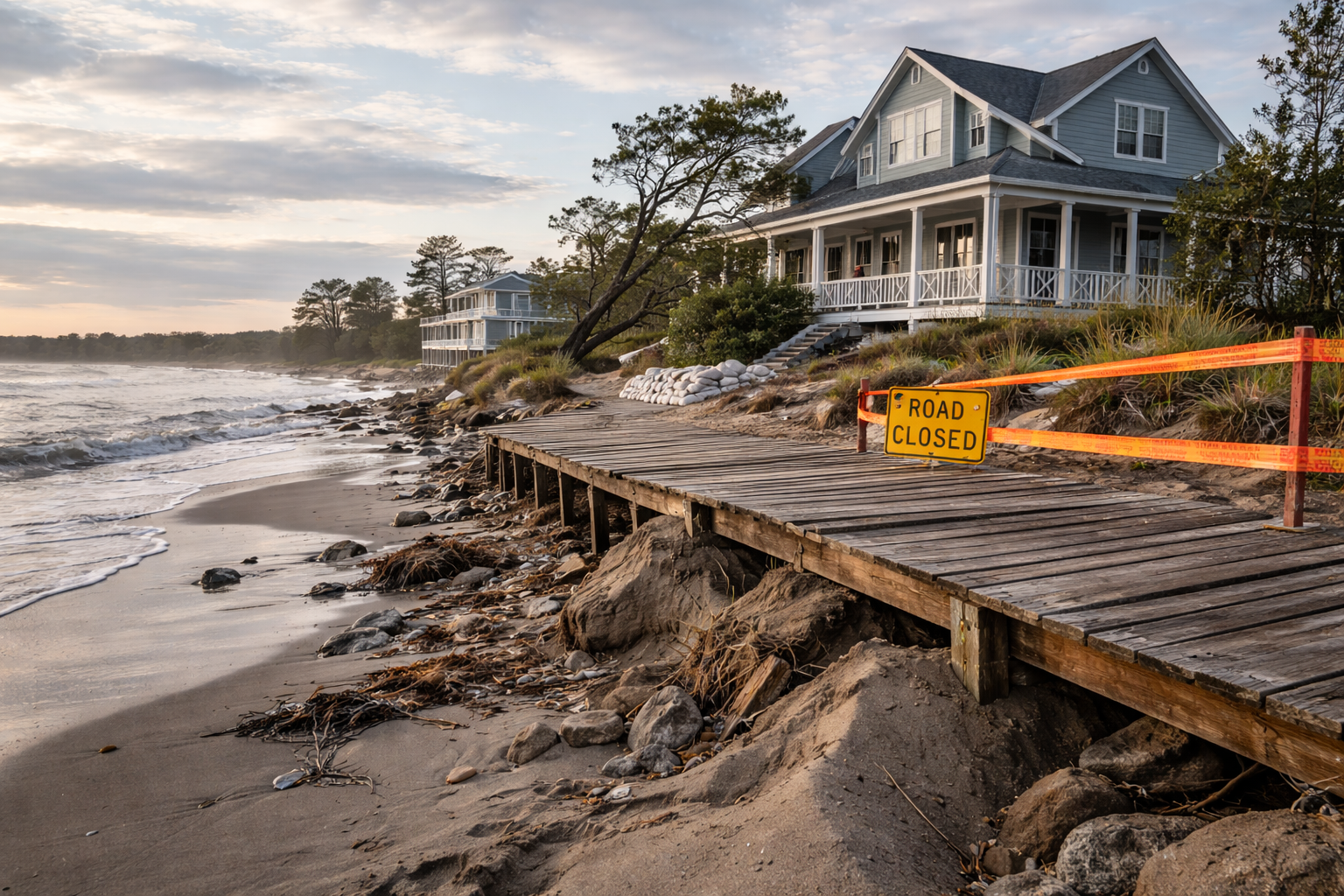
Climate risk is changing how buyers think about real estate. It is also reshaping conversations about title insurance, insurability, and long-term property use.
More homebuyers in Virginia and across the country are asking questions like:
Is this home in a flood zone?
What is the storm or wildfire risk here?
Could environmental factors affect my insurance options or my rights as an owner?
Those are smart questions. They belong in your due diligence.
Why climate risk matters to title work
Climate risk can affect more than the home itself. Major storms and flooding can impact insurance requirements, access to the property, and even recorded rights like easements. These factors can add extra steps during underwriting and closing.
Here are a few ways this can show up:
Boundaries, access, and easements
Major floods, erosion, and storm damage can affect:
Where property boundaries are understood to be
Whether recorded easements are still usable in practice
Whether you can legally access the property the way you expect under Virginia law
When these questions come up, resolving them may require an updated survey, legal review, or recorded agreements. In more complex cases, it can involve litigation before a future transaction feels “clean” to a buyer, lender, or title insurer.
Insurance requirements are changing
Lenders and insurers are paying closer attention to higher-risk areas. Depending on location and risk profile, buyers may see:
Higher premiums
Higher deductibles
Reduced coverage options
More underwriting scrutiny (especially for flood-related coverage)
Even when title is clear, financing and insurability can become the deciding factor.
Disclosure rules are evolving
Many states, including Virginia, are updating seller-disclosure and consumer-protection rules tied to known hazards, prior damage, and insurance history. What gets disclosed can become part of the transaction record, influence underwriting, and affect resale later.
What Buyers Should Know
Flood zones and hazard designations are usually reviewed
Flood-zone information and other hazard designations are commonly reviewed as part of the closing process, even though they are not automatically “title defects.”
If a property is in a FEMA-designated Special Flood Hazard Area and you are using a mortgage, your lender will typically require flood insurance in addition to standard homeowners coverage.
Flood, homeowners, and title insurance do different jobs
These policies work together, but they are not interchangeable:
Flood insurance helps cover specific water-related damage.
Homeowners insurance covers a broader set of risks (depending on the policy).
Title insurance protects against covered defects in ownership rights and certain recorded interests.
Understanding what each policy does (and does not) cover is key.
Claims history and known damage can affect cost and coverage
A history of flood, wind, or fire losses can lead to higher premiums or limited coverage options. This can happen even when the title itself is clear.
Also, some environmental issues can result in recorded items such as environmental liens or cleanup-related notices, especially when contamination has been documented by public authorities. Those recorded items are exactly the kind of thing a title search is designed to identify and address before closing.
Emerging risks we are seeing in 2026
More properties are being affected by extreme or unusual weather, including repeat flooding, stronger coastal storms, and heavier rain events documented in Virginia and nationally.
This does not automatically create a title problem. But it can complicate how property rights are interpreted or exercised under Virginia law and local ordinances.
Examples:
Shoreline or riverbank erosion may raise questions about where a boundary should be drawn.
Access routes and easements may become unclear if the physical route shifts or becomes unusable.
Severe damage to improvements can create practical questions about how easements, restrictions, or covenants function after a major loss.
In these situations, title insurance helps protect you against covered defects while the underlying issues are evaluated and resolved through surveys, recorded agreements, or legal processes.
What title companies are watching
Title professionals pay close attention to the official records and rules that shape property rights and future use, including:
Updated hazard mapping
FEMA flood maps and related designations change over time. A property can move into or out of a higher-risk category, which can affect lender requirements and insurance costs for future buyers.
Local rebuilding and mitigation rules
Virginia jurisdictions may update ordinances tied to rebuilding, mitigation, and development in higher-risk areas. Some places may limit how or where you can rebuild after certain types of damage, or require specific mitigation steps.
These rules can affect:
Property value
Future use
Lender and insurer comfort
Infrastructure and mitigation projects
Projects like drainage improvements, levees, sea walls, and new access routes can affect property rights. They often involve new or modified easements, rights-of-way, or restrictions recorded in land records. Those recorded items need to be identified and understood during title review.
Smart questions to ask
Climate risk does not need to derail your purchase, but it should be part of your due diligence. Consider asking your Virginia title company, closing attorney, and insurance agent:
Are there any recorded environmental liens, restrictions, or notices in the land records?
How do the property’s flood-zone status and hazard designations affect lender and insurance requirements?
Are there recorded easements or covenants related to drainage, utilities, shoreline protection, water management, or emergency access?
Based on the address, what can my insurance agent tell me about the risk profile, coverage options, and deductibles, especially given premium trends in Virginia?
Many buyers are also using third-party climate-risk tools, including tools integrated into major real estate platforms, to understand property-level risk before making an offer.
This is not about fear
Climate risk is one factor among many. It is not automatically a deal-breaker.
The goal is to help you make informed choices early, so you can avoid surprises later. That might mean budgeting for mitigation work, choosing different coverage limits, or negotiating based on what it will take to manage risk over time.
If climate risk is on your mind, let’s talk. We will help you ask the right questions and gather the right information so you can move forward with confidence.
Further reading and sources
For buyers who want to dig deeper into climate risk, insurance, and Virginia policy, these resources provide helpful background:
Yale Law Journal – The Uninsurable Future: The Climate Threat to Property Insurance, and How to Stop It yalelawjournal
Resilient Virginia – Climate Risk and Response: Physical Hazards and Social Impacts resilientvirginia
Virginia Mercury – Virginia legislation attempts to combat growing impacts of climate crisis virginiamercury
Northern Virginia insurance trends – Home Insurance Costs Expected to Climb Again in 2026 focusonnova
Zillow / First Street – article on integrating property‑level climate‑risk data into home listings housingwire
Mortgage Bankers Association – Climate‑Related Risk and Sustainability mba
These resources are for general information only and are not legal or insurance advice. Always consult your Virginia closing attorney, title company, and insurance professionals for guidance on your specific transaction.